The hidden trap in product measurement: The Iteration Death Cycle
Stay up to date with the latest insights
The product team had been celebrating their "wins" for months.
Engagement metrics were up. Time-in-app had increased. The dashboard was green across the board. Yet somehow, customer satisfaction was dropping. A clear sign that churn was slowly saying hello.
Sound familiar? This team had fallen into what I call the "metrics-first iteration death cycle" – a trap that's ensnaring more product teams than ever.
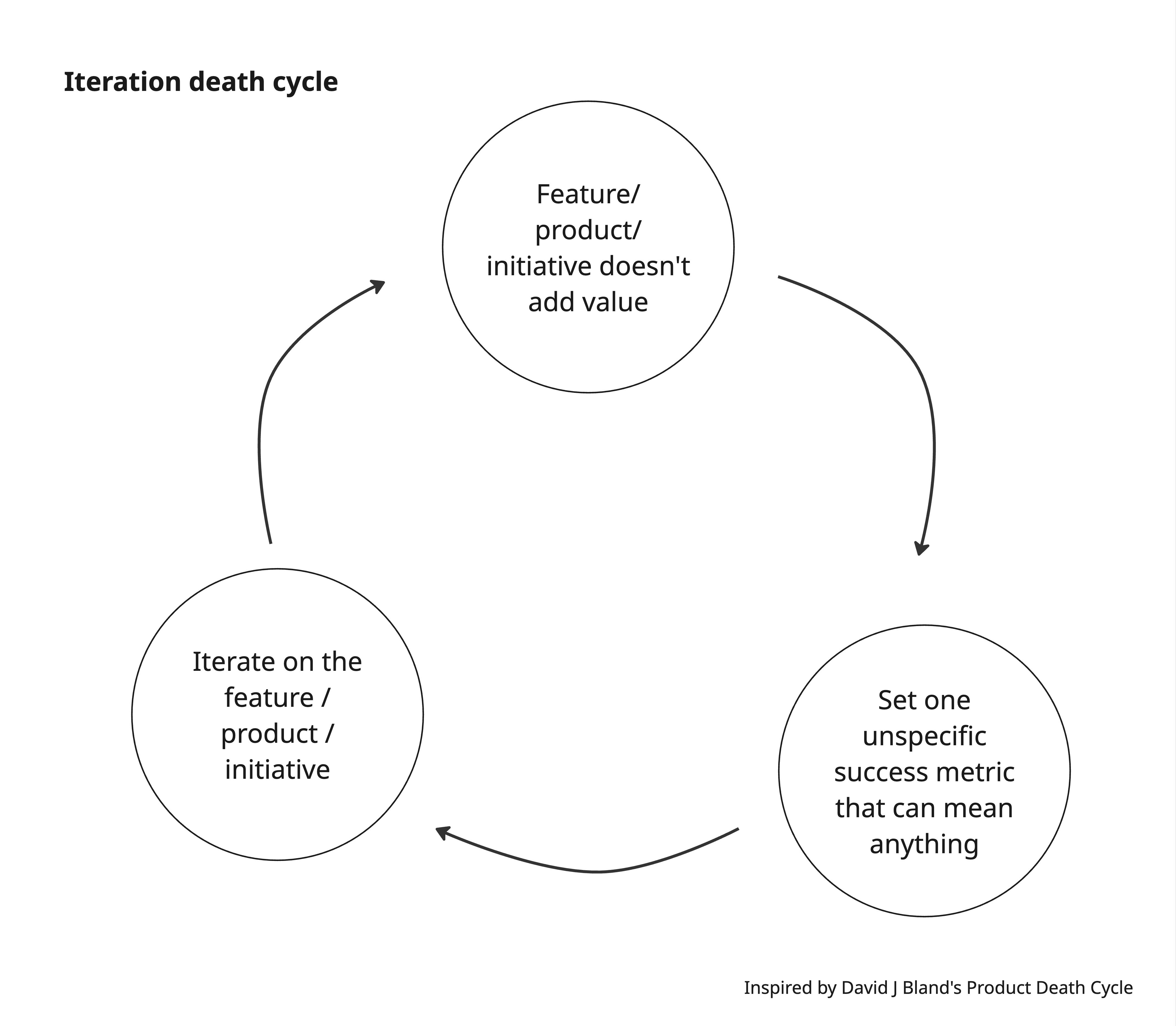
Here's how to recognise if you're in this cycle and, more importantly, how to break free.
1 - The Metrics-First Trap
The scenario plays out like this:
Team somehow comes up with a metric to improve
They brainstorm ways to move that metric
They implement small changes and measure impact
They celebrate when the number moves
They repeat the process, making incremental optimisations
The problem? They're starting with the metric, not the outcome. This approach often leads to:
Gaming metrics instead of solving problems (like adding games to a business social network to boost engagement without adding value for meaningful interactions - hello LinkedIn 👋)
Endless tiny improvements that never add up to meaningful change
Teams that get stuck optimising numbers, not customer experiences
Or even harming the business, e.g. through an image damage, or by only changing the way how to calculate the numbers without any actual product improvement.
2 - The Outcome-First Approach
Instead of starting with metrics, I coach teams to follow this sequence:
𝗦𝘁𝗲𝗽 𝟭: 𝗔𝘀𝗸 "𝗪𝗵𝗮𝘁 𝗱𝗼𝗲𝘀 𝘀𝘂𝗰𝗰𝗲𝘀𝘀 𝗹𝗼𝗼𝗸 𝗹𝗶𝗸𝗲?"
Have the team describe the actual benefit of what they're building. Specifically:
For the 𝗰𝗼𝗻𝘀𝘂𝗺𝗲𝗿 of the feature (users, colleagues, systems, AI, agents, etc.)
For the 𝗯𝘂𝘆𝗲𝗿 of the feature (who pays for it, or pays because of it)
For their 𝗰𝗼𝗺𝗽𝗮𝗻𝘆 (business goals, strategic fit, OKRs, etc.)
This forces teams to articulate the real value they're trying to create before jumping to how they'll measure it.
𝗦𝘁𝗲𝗽 𝟮: 𝗢𝗻𝗹𝘆 𝘁𝗵𝗲𝗻 𝗮𝘀𝗸 "𝗛𝗼𝘄 𝗱𝗼 𝘄𝗲 𝗺𝗲𝗮𝘀𝘂𝗿𝗲 𝘁𝗵𝗮𝘁?"
After they've articulated success in outcome terms, ask: "Which metrics will significantly move in which way if we achieve this outcome?"
This is critical! The metrics now emerge from the outcome, not the other way around.
3 - A Real-World Example
Let me share a real example from a team I'm currently coaching:
Feature: Automation of a recurring customer support issue created by a previous feature
Team's initial success description: "When our fix is successful, none of our team members will have to do anything anymore regarding this problem"
Their first proposed metric: "Number of support tickets because of this goes down to 0"
My challenge: "When there are no tickets, does that mean the issue is solved? Are there other ways this could surface? Could tickets disappear without the problem being fixed?"
Their answer: "Yes" to all questions). Meaning their metric wouldn't actually measure success.
Their revised metric: "Number of minutes spent on this topic by our team goes to 0"
My next challenge: "Is there a chance you'd stop working on this even if it's not solved?"
They answered "yes" again, revealing that even their revised metric could be misleading.
Final conclusion: They needed a combined metric: "The issue doesn't surface AND team time spent is zero" – only then would success be truly measured.
What really happened: Well… of course the result wasn't 0 🙂 They learned that even with the best fix can't remove all issues. New ones open up, old ones appear in new shapes etc.
4 - Applying This to Your Work
This approach works for everything from small features to massive initiatives:
Small features: Define success outcomes before jumping to metrics
Major releases: Start with the customer and business value, then determine how to measure them
Strategic initiatives: Begin with the transformation you're seeking, then identify metrics
By reversing the typical order – putting outcome before measurement – you ensure that what you're measuring actually matters.
Remember the formula:
❌ Don't: Metrics-first success measurement
✅ Do: Outcome-first, metrics second success measurement
Product management insights, delivered to your inbox
Sign up for weekly product insights. No spam.