Usability is useless. Or is it?
Stay up to date with the latest insights
Your team just spent three weeks perfecting the UX of a feature that nobody needs.
Meanwhile, your competitor just launched a clunky - or thanks to AI coding an okayish - but valuable solution that's stealing your customers.
This scenario plays out daily across product teams worldwide, driven by a dangerous obsession with perfect usability over actual value. It's time for some uncomfortable truths about what actually drives product success.
And let me be clear upfront: What I'm writing here is only true when Usability is NOT a core part of your value proposition, like it is for example for any Apple product or the email app (now productivity suite) Superhuman.
Management doesn't care about usability itself (and they're right)
Your company values might mention "easy and slick experiences," but when usability initiatives get repeatedly deprioritised, that's not hypocrisy, it's rational business thinking.
Here's what management actually cares about:
Revenue and profit margins
Market positioning and innovation
Adoption and conversion rates
Retention and churn prevention
Cost management
When was the last time “improved usability” directly moved these metrics without improving something else first?
Perfect usability alone rarely drives business results. It's table stakes – necessary but insufficient. What drives success is solving real problems with real value. Again, unless your whole value proposition and your differentiator is about the superior usability.
The science behind value vs. usability
This isn't just my opinion – it's backed by decades of research:
The Technology Acceptance Model (Fred Davis, 1989) identifies two key factors that determine whether users adopt a product:
Perceived Usefulness (Value)
Perceived Ease of Use (Usability)
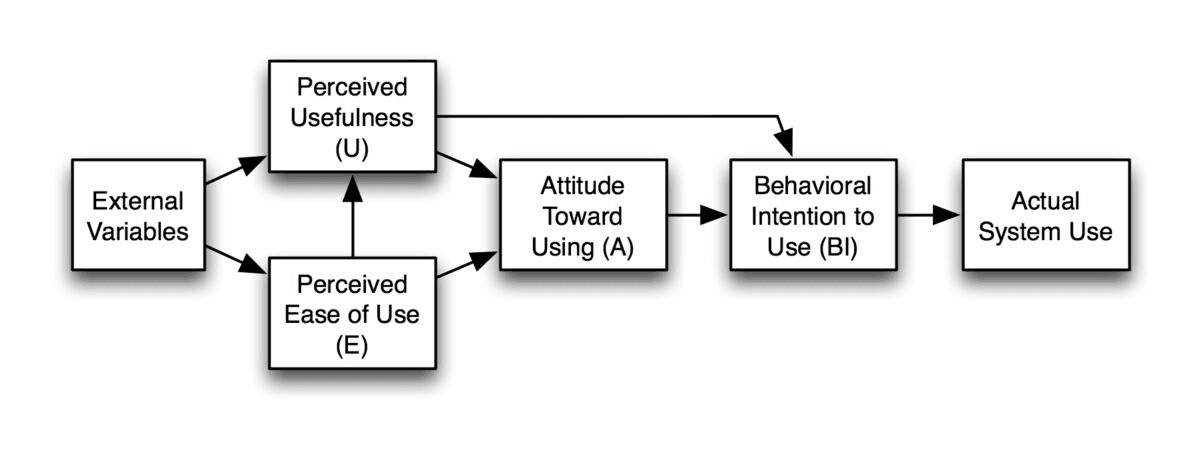
Technology Acceptance Model, Fred Davis, 1989
Based on Davis, perceived usefulness influences intention to use more strongly than perceived ease of use. A useful but somewhat clunky product can succeed, while a beautiful, useless one will fail spectacularly.
Dan Olsen's Product-Market Fit Pyramid reinforces this hierarchy:
Target customer
Underserved needs
Value proposition
Feature set
UX
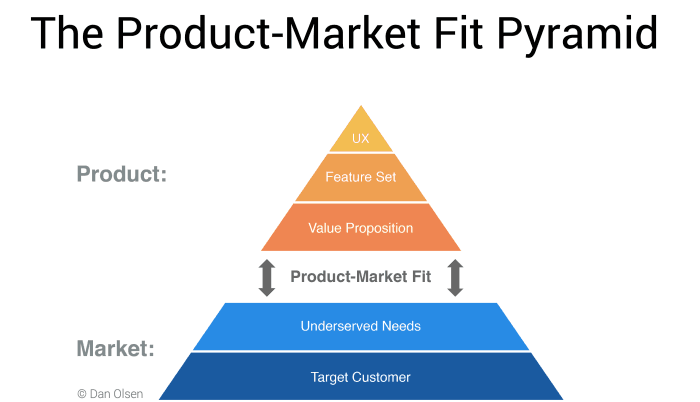
The Lean Product Playbook, Dan Olsen
Notice that UX comes fifth. Not first, not second, not even third.
It's the icing on the cake, so to say. But the fundamentals of PMF are: Finding an audience with an underserved need. Serve them with the right value proposition first and foremost, with the features that serve that value proposition, and with the usability that serves those features to the audience.
Of course he doesn't say that UX is useless. I'm not saying it either. But without the fundamentals being in place, UX won't help you with anything.
How to actually get UX improvements approved
Ok, there is no guarantee but there is a way to increase your chances to get UX improvements approved.
The mistake most product and UX people make is that they argue that "better experiences will lead to more revenue." With no explanation in which way it should help increase revenue.
The other argument is "but someone should care about the customers and we need to give them a superior experience, because we want to be customer centric". This approach can even sound like blaming your manager to not care about their own work.
Either approach destroys your credibility.
Instead, think like them, talk like them:
A. Speak the language of data
Look at analytics, screen recordings, and support tickets to identify specific friction points that directly impact business metrics.
B. Show the business impact
For example: "Our checkout flow has a 62% abandonment rate at step 3, costing us approximately $25,000 per month" will get more attention than "our checkout flow isn't user-friendly."
C. Don't delay value delivery for perfect UX
For new features, aim for "usable enough to deliver the core value" – then iterate based on actual user behaviour, not theoretical perfection.
I know you're afraid of doing C because you fear you'll never get the chance to iterate on the UX. That might be true. Chances get higher when you back your iteration request based on points A and B. But when you constantly delay value delivery because of perfect UX, you'll for sure lose credibility. And again: I'm talking about building new features, not iterating on existing features.
Practical decision mental model for product teams
Here's how to approach the usability question pragmatically:
For new products:
Unless ease of use IS your core value proposition, "good enough" usability that enables users to experience your core value is sufficient
Validate value first, then optimise experience
Example: My matcha shop (harumatcha.ch) is clunky, but people can buy the product – which matters more to those who have tried it (and to our main target group of B2B customers) than perfect navigation. It won't help us grow the product through the natural appeal of the website, and I'm pretty sure we're losing customers that discover out website through chatGPT or Google (our main traffic drivers) but we're selling B2B in the first place, and for that what we have is sufficient for B2C. And yes we'll be moving to B2C but we have to work on that with our fulfilment center ;)
For existing products:
For new features, assess whether the UX is critical to the value
If you can't iterate later or have sufficient resources, invest in better UX upfront
Otherwise, go with "good enough" and improve through iteration rather than delaying launch
For existing features in an existing product, prove that improving UX will solve a specific friction point which leads to a leakage in the funnel. When you fix that point, you expect the funnel to improve conversion by x% which in return will lead to y% uplift in revenue.
For fixing usability dept, I say the same to tech dept: Make a case about the downside of the users not being able to navigate the product anymore. How much will you lose?
So, coming back to the title whether Usability is useless or not. As always: It depends.
When you build new products, the real question isn't "Is the experience perfect?" but "Is the experience sufficient for users to obtain the value we're offering?" If yes, then you're good to go. This doesn't mean ignoring usability, just prioritising it appropriately in relation to value delivery.
When you are working on an existing product, you should care about usability in every iteration of the features and the overall product. If you don't do it frequently, you'll need to clean up the usability from time to time to avoid usability dept. Usability dept can break your product over time and you'll lose customers as much as tech dept. You can increase the chance for approval through showing the business value of cleaning it up.
Reminder for product leaders
And then there is a difference between building business software and consumer software. In business software, usually the value > usability, but high usability can be a great differentiator in a world in which software providers don't care enough about usability. In consumer tech, usability is extremely important to make sure consumers don't switch to the competitor product because it's easier to use. Remember Davis? Perceived ease of use supports perceived value. That's extremely important in consumer tech.
How does it work in your company? Do you have problems prioritising usability fixes? Do you agree or disagree with the value first, usability second principle? Or is high usability your differentiator?
Reach out and tell me about the world that you operate in.
-
This article was edited by Viktoria Jancurova.
Product management insights, delivered to your inbox
Sign up for weekly product insights. No spam.